

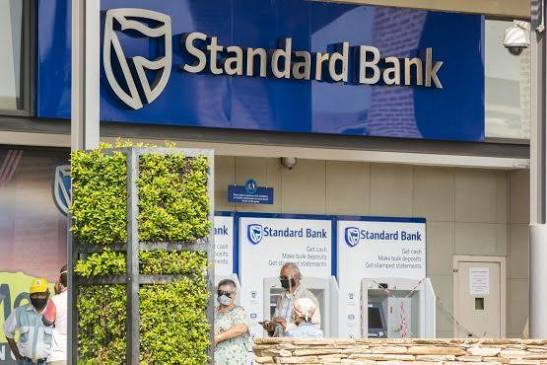
Standard Bank’s Sustainability Academy has recently secured R3.8 million in co-funding from DEG Impulse, which is supported by Germany’s Federal Ministry for Economic Cooperation and Development (BMZ).
The Academy has trained more than 10,000 entrepreneurs across 15 African markets in its first year, securing German development funding to expand free sustainability training through 2028. The funding is to equip more African businesses with practical skills to respond to climate change.
The funding covers approximately half the academy’s operating costs and will support curriculum development, platform enhancements, impact measurement and the programme’s long-term sustainability. Training will remain free and open to Standard Bank clients and non-clients across Africa and beyond.
The initiative aims to bridge the gap between sustainable finance and businesses’ ability to access it. Standard Bank has committed to mobilising more than R450 billion in sustainable finance by 2028, but says enterprises also need the knowledge to identify opportunities, develop credible business cases and secure funding.
“Finance alone is not enough,” said Dr Manessah Alagbaoso of Standard Bank, highlighting growing client interest in renewable energy, climate-smart agriculture and resource efficiency.
DEG Impulse said its support reflected confidence in the academy’s scalable model and potential to strengthen private-sector development, competitiveness and sustainable economic opportunities.
The expansion comes as Africa seeks a greater role in shaping global climate policy and directing climate finance. Ethiopia will host COP32 in Addis Ababa in 2027, creating an opportunity to showcase practical, business-led climate action.
Alagbaoso said African businesses needed viable projects ready for investment when international attention turned to the continent.
Building sustainability expertise, he argued, could strengthen their ability to participate in climate-related economic opportunities.
The academy’s curriculum covers sustainability principles, renewable energy, climate-smart agriculture, water and wastewater management, and carbon. Delivered through the Community Training platform in collaboration with Microsoft and Philanthrosoft, it uses African case studies to connect sustainability concepts with everyday business decisions.
Participants have reported practical benefits.
Nigerian agribusiness entrepreneur Temidayo Bright Okunfolami of Davic Smart Investment Limited said the case studies helped him understand how to integrate renewable energy and resource management into his business while strengthening climate resilience planning.
In Tanzania, Scolla Jonathan of Skyverse Solutions said learning about the circular economy had changed how she viewed innovation and opportunities to create value from discarded materials.
Further enhancements planned through 2027 include new learning modules, business-led case studies, an impact assessment tool and referral functionality to encourage more enterprises to participate.
Standard Bank is also partnering with Stellenbosch University and the University of the Witwatersrand to strengthen the academy’s academic rigour and incorporate African sustainability research and business experience.
The programme’s next phase will test whether wider access to practical training can help more businesses translate sustainability ambitions into measurable action.