



Eco-tourism has become more than just a trend, it is increasingly seen as a pathway for Africa to balance conservation, cultural preservation, and economic growth. It is also closely tied to the broader push for sustainability in Southern Africa, where governments, businesses, and communities are working to promote renewable energy, protect biodiversity, and build resilient economies. As the global conversation around climate change, biodiversity loss, and responsible travel deepens, eco-tourism offers travelers the chance to experience the continent’s spectacular landscapes and wildlife while actively contributing to their protection.
From misty mountain ranges to arid deserts, Africa is home to ecosystems of unparalleled richness. Yet few places illustrate the potential of eco-tourism better than the Okavango Delta in Botswana, a lush inland floodplain that has earned its place as one of the natural wonders of the world. Often called “the river that never finds the sea,” the Delta’s unique hydrology transforms the heart of the Kalahari Desert into a thriving oasis each year, attracting wildlife in astonishing abundance and offering travelers unforgettable encounters with nature at its most raw and beautiful.
The Rise of Eco-Tourism in Africa
Tourism has long been one of Africa’s pillars, drawing millions of tourists each year to see the iconic attractions such as the Serengeti migration, Victoria Falls, or Rwanda’s gorilla trekking. However, traditional mass tourism came with an expensive price: environmental degradation, pressure on fragile ecosystems, and little benefit for surrounding communities.
Eco-tourism was the answer. Eco-tourism differs from conventional tourism in that it is low-impact tourism that is specifically geared towards protection and community empowerment. Practice would include restricting visitor numbers, building camps and lodges which are sustainable, hiring and training locals, and utilizing revenue streams for wildlife protection.
All over the continent, eco-tourism has saved threatened species, funded anti-poaching patrols, and offered alternatives to unsustainable industries. For travelers, it has enhanced the safari experience, offering not just wildlife encounters, but a deeper understanding of how people and ecosystems are interconnected.
The Okavango Delta: A Living Paradise
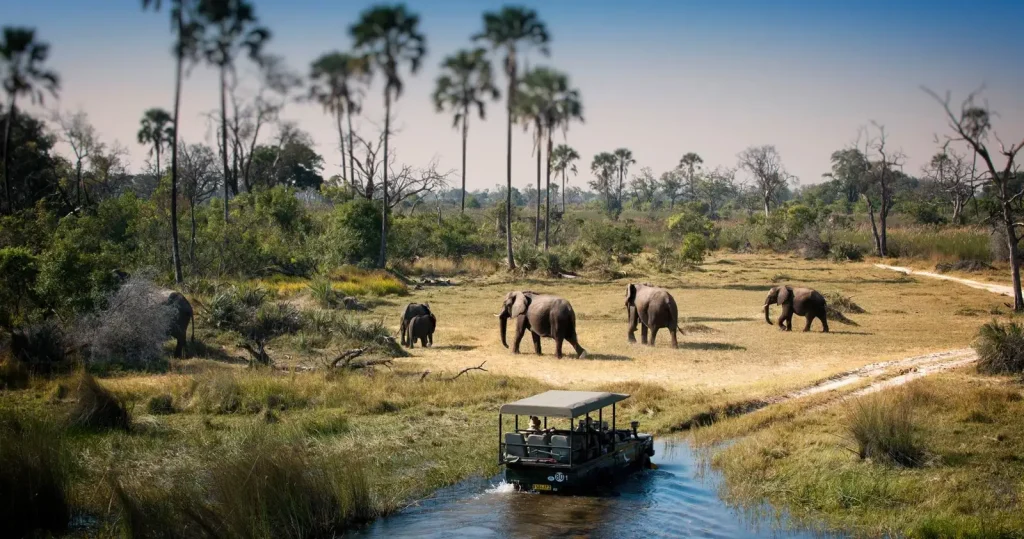
The Okavango Delta is perhaps Africa’s most vivid example of eco-tourism at work. Covering up to 15,000 square kilometers at its peak flood, the Delta is a dazzling patchwork of lagoons, islands, and floodplains. Each year, seasonal rains from Angola feed the Okavango River, which flows into the sands of the Kalahari rather than flowing to the ocean. The result is a temporary Eden, a green jewel that sustains vast herds of elephants, hippos wallowing in crystal channels, and predators like lions and leopards that thrive in this watery landscape.
In recognition of its ecological importance, the Delta was designated a UNESCO World Heritage Site in 2014. It is home to more than 400 bird species, one of the world’s largest elephant populations, and countless other mammals, reptiles, and fish. For travelers, the Okavango offers an intimate glimpse into nature’s cycles of renewal, one that is both breathtaking and humbling.
Why the Okavango Delta Stands Out
Strict Conservation Policies
Botswana has adopted a “high-value, low-impact” tourism strategy that prioritizes quality over quantity. Unlike many destinations, the Okavango Delta limits the number of visitors and lodges, ensuring that the ecosystem is not overwhelmed. Most camps are small, intimate, and eco-friendly, built from natural materials, often powered by solar energy, and committed to leaving minimal trace on the land.
This approach not only protects the Delta but also enhances the traveler’s experience. Instead of crowded vehicles and busy lodges, visitors enjoy a sense of solitude and immersion in the wilderness, where silence is broken only by birdsong or the distant call of a lion.
Community Involvement
Sustainable tourism cannot exist without the involvement of local communities. In the Okavango, Groups such as the BaYei and Hambukushu peoples have long histories of living in harmony with the Delta’s rhythms. Today, many community members are directly involved in eco-tourism, as guides, trackers, lodge staff, and cultural ambassadors.
Their knowledge adds depth to the experience. A mokoro (dugout canoe) ride, for example, is not just a journey across a lagoon but a chance to learn about traditional navigation techniques, medical plants, and folklore tied to the Delta. By employing and empowering locals, eco-tourism ensures that the benefits of conservation are widely shared, reducing pressure on communities to turn to activities like poaching or unsustainable fishing.
Unique Experiences
The Okavango offers activities unlike anywhere else in Africa. Travelers can glide silently through narrow channels in a mokoro, watching elephants cross in front of them. Walking safaris, led by expert guides, provide the thrill of tracking wildlife on foot, an intimate and humbling way to connect with the bush. Birdwatchers delight in the Delta’s diversity, from lilac-breasted rollers to fish eagles.
These activities are deliberately low-impact. Unlike large-scale game drivers elsewhere, they emphasize respect for wildlife and the environment. This not only preserves the Delta’s balance but also fosters a deeper appreciation among visitors.
Eco-Tourism’s Wider Impact Across Africa
The Okavango Delta is not alone in demonstrating the value of eco-tourism. Across Africa, similar initiatives are showing how responsible travel can safeguard biodiversity while uplifting people.
Rwanda’s Volcanoes National Park has made gorilla trekking one of the most successful eco-tourism ventures in the world, with permit revenues funding both conservation and community development.
Kenya’s community conservancies, such as Laikipia and the Maasai Mara, empower pastoralist communities to manage wildlife and tourism directly, ensuring profits flow locally.
South Africa’s private reserves have restored land degraded by farming and reintroduced species such as rhinos and cheetahs, supported by eco-tourism revenue.